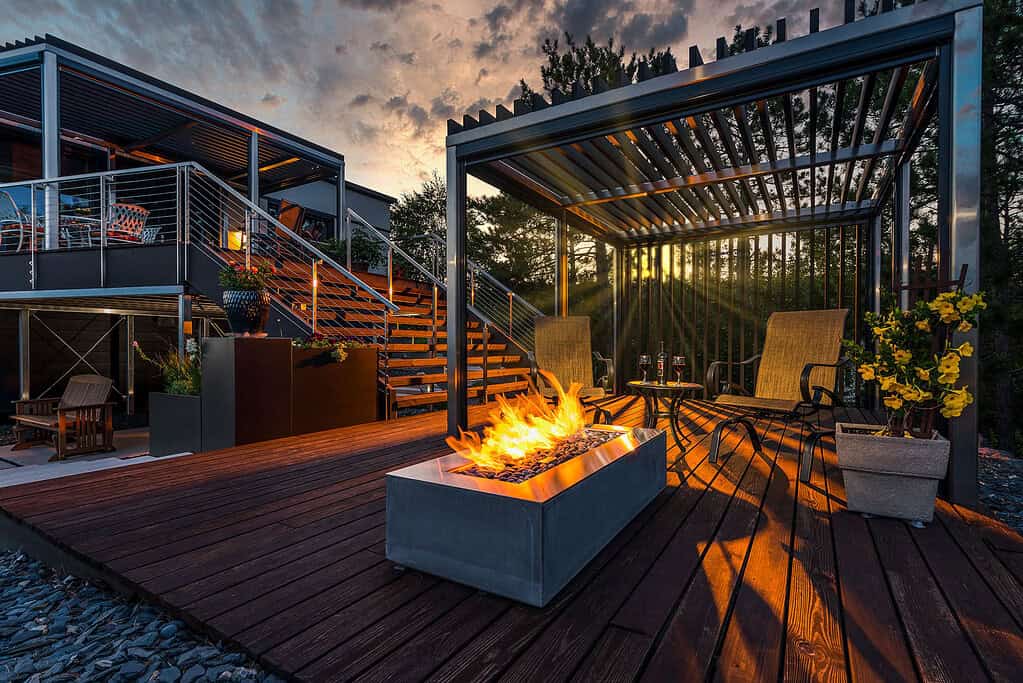
Architectural Gardens: The Luxury Landscape Paradigm Reshaping Outdoor Living
There is a moment, walking through a well-designed home, when you arrive at the back door and something remarkable happens. The space doesn’t end. The materials continue. The lines carry through. What was interior becomes exterior so seamlessly that the transition barely registers – and suddenly, the yard feels less like a yard and more like an extension of your home.
This is the essence of the architectural garden – and it is a defining landscape philosophy of 2026.
The concept is elegant in principle and exacting in craft: an outdoor environment designed to be a flawless continuation of your home. Stone walls that echo the home’s façade. Terraced levels that mirror interior floor plans. Plantings selected not just for beauty, but for the way they frame a view or soften a line. The result is a property that feels whole. Considered. Complete.
Have a vision? Reserve a consult.

The End of the Sharp Line
For decades, the relationship between a home and its landscape was largely transactional. The house ended at the door. The yard began at the step. Two separate worlds, separated by threshold and intention.
That distinction is dissolving. Leading landscape architects describe a generation of homeowners who want spaces that “enhance their experience of the outdoors – not compete with it.” The desire is for calm, grounded outdoor spaces that feel deeply connected to the surrounding environment – and to the home itself. Industry designers echo this, describing a “continued blurring of the interior to the exterior” – where zones flow from home to protected garden space with real visual and architectural continuity.
In practice, this means every design decision in the landscape – every material, every grade change, every planted border – is made in conversation with the home it surrounds. Not after the fact. Not as an afterthought. From the very beginning.

What Makes a Garden Architectural?
The architectural garden isn’t defined by a single feature. It’s defined by a design philosophy – one that treats the outdoor environment with the same rigor and intention as the interior. The hallmarks are consistent: stone walls and sculptural hedges that mirror the style and lines of the home. Concrete planters and built-in seating that feel permanent rather than placed. Terraced levels that create depth and definition. Materials – natural stone, weathered steel, reclaimed wood – that age with the same grace as the structure they surround.
Living Etc. notes that natural stone in particular has become central to this movement, “creating permanence, texture, and understated drama” in outdoor spaces that were once defined by softscape alone. The shift is significant: from gardens that are purely decorative to gardens that are genuinely structural – spaces that hold their character across every season, not just the months when things bloom.
In northern Minnesota, this approach takes on additional weight. A landscape built with architectural intention doesn’t disappear in November. It holds its form through winter, frames the property through spring’s mud season, and reaches its full expression in the long days of summer. It is, by design, built to endure.

Designed From the Outside In
The most powerful architectural gardens share one quality above all others: they feel inevitable. As though the space could not have taken any other form. Achieving that feeling requires a design process that begins with the home – its architecture, its materials, its relationship to light and landscape – and works outward from there.
This is precisely where the Design-Build model proves its value. When the team that designs your landscape is the same team that builds it, the translation from intention to execution is exact. There is no gap between the drawing and the finished space. No compromise made in the field that wasn’t anticipated in the plan. As outdoor living experts describe it, the goal of modern landscape architecture is to “create spaces that support people and nature” – spaces that feel timeless rather than trendy, and that continue to perform beautifully long after the installation crew has left.
At Miller Creek, this is the standard we hold every project to. Not simply: does it look beautiful? But: does it belong? Does it extend the architecture of the home in a way that feels considered and complete? Does it elevate the property – and the life lived on it – in a way that endures?

Beyond Ordinary
An architectural garden is not a trend you follow. It is a standard you set – for your property, for your outdoor life, and for the way your home presents itself to the world. It is the difference between a yard that surrounds a house and a landscape that completes one.
June in northern Minnesota is the month when that difference becomes most visible. When the landscape is alive and the outdoor spaces are in full use and the evenings are long enough to linger in. It is the best possible moment to look at your property with fresh eyes and ask: is this what it could be?
If the answer is not yet – we’d welcome the conversation.
Begin the Conversation
Miller Creek’s design team is scheduling consultations for the 2026 season. Whether you’re envisioning a complete landscape transformation or a considered enhancement to what already exists, we design and build outdoor spaces that are worthy of the homes they surround.
Reach out online or call 218.727.3040 to meet with a designer.